Exhaustion of Russian Fleet and Engine Failures Restrict Missile Strike Capabilities, Expert Says
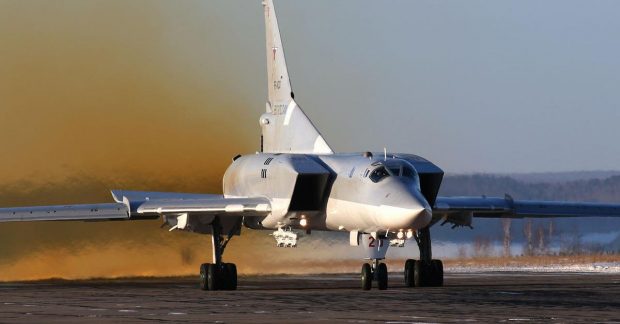
Russia faces severe technological barriers in replacing its strategic bomber engines, significantly constraining its capacity for massive simultaneous missile salvoes, according to military analyst Anatolii Khrapchynskyi.
 🚨Events
Photo: UNIAN
Key points
- Russia is unable to resume serial production of NK-12MP and NK-25 engines due to lost Soviet manufacturing capability.
- Damage to the Beriev complex in Taganrog and chip shortages severely hinder repair of strategic aircraft and A-50 radars.
- The remaining fleet of 25–30 operational Tu-95MS bombers strictly limits Russia's maximum simultaneous missile salvo size.
The Russian Federation is encountering critical industrial and technological constraints that prevent it from restoring full-scale production of combat aircraft and strategic bomber engines. As a result, its military relies increasingly on dwindling Soviet-era stockpiles, according to Anatolii Khrapchynskyi, development director at a defense firm and reserve officer of the Ukrainian Air Force.
The expert highlighted that the production of key powerplants—such as the NK-12MP turboprops for Tu-95MS bombers and NK-25 engines for supersonic Tu-22M3 aircraft—remains a major bottleneck. Each operational flight carrying Kh-101 cruise missiles burns through the remaining structural lifespan of aircraft wings much faster than peacetime maintenance schedules allow, while the lost Soviet industrial base cannot be easily recreated.
Maintenance Bottlenecks and Fleet Degradation
Maintenance networks have also suffered significant disruptions. Damage to the infrastructure at the Beriev Aircraft Company in Taganrog has severed key repair logistics. Concurrently, the next-generation A-100 Premier radar project is stalled due to sanctions on Western microelectronics, leaving Russia with only 5 to 6 operational A-50 airborne early warning aircraft.
Similar strain is evident in MiG-31K interceptors carrying Kinzhal missiles, where boosted D-30F6 engines exhaust their service life after just a few sorties. Furthermore, ground-attack Su-25SM3 jets are merely deep modernizations of existing Soviet airframes, as modern Russia lacks complete production lines for new single-seat models.
As Khrapchynskyi concluded, the enemy is operationally limited to roughly 25–30 functional Tu-95MS bombers, a dozen Tu-160s and MiG-31Ks, and around twenty Tu-22M3s. This ceiling strictly caps the maximum simultaneous missile salvo Russia can generate, forcing command to preserve its remaining fleet.
Source UNIAN — unian.ua/weapons/rosiya-maye-obmezheni-mozhlivosti-vidnovlyuvati-st… ↗
Read next
 💼Economy
Taxes during mothballing: how the state can support war-halted enterprises
The forced shutdown of Ukraine's largest metallurgical plants highlights the urgent need to review tax burdens and support personnel during idleness.
 🧠AI Analysis
Mild Start to Winter 2026: What Weather to Expect in December
Meteorologists forecast a relatively warm December 2026 in Ukraine with temperatures above normal, alongside intermittent cold snaps and wet snow.
 🧠AI Analysis
Aggressor’s New Energy Strategy: Targeting Odesa and Dnipropetrovsk Regions
Russian forces have altered their tactics of striking Ukraine's energy system, focusing on destroying power lines and grid networks to isolate entire regions.
 🧠AI Analysis
The smallest owl in Ukraine spotted in the Chornobyl Reserve: key features of the species
Researchers in the Chornobyl Reserve have recorded the Eurasian pygmy owl, the smallest owl species in Ukraine.
 🧠AI Analysis
Special Operation Near Libya: Ukrainian Drones Strike Russian Warship and Supply Vessel
Ukrainian forces carried out a successful operation near the Libyan coast, destroying a modern Russian corvette and damaging a military cargo ship.
 🛡️Security
Electricity restored in Rivne region following enemy attack
Energy workers have fully restored power to the Sarny district, which was affected by a Russian strike on November 20.