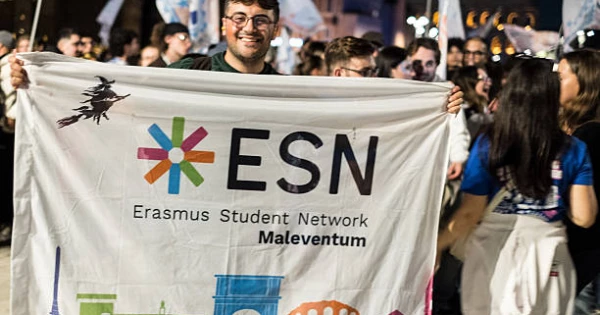
EU Imposes Total Ban on Russian Residents and Organizations in Erasmus+ Program
The European Union has updated its Erasmus+ rules for 2027, officially barring all individuals residing in Russia and Russian organizations from participating.
 🎓Education
Photo: nikvesti.com
Key points
- The ban applies to all Russian residents regardless of their nationality.
- Russian organizations are disqualified from all Erasmus+ sectors.
- Erasmus Mundus master's scholarships are no longer available to those in Russia.
- The policy is part of the EU's long-term strategic framework through 2027.
The European Union has formally approved new regulations for its flagship educational program, Erasmus+, which mandate the total exclusion of representatives from the Russian Federation. According to the updated guidelines for 2027, any individuals residing in Russia, as well as organizations based in the country, are no longer eligible to participate in academic exchanges or grant initiatives funded by the EU.
Complete Academic Isolation
A significant aspect of the new rules is that the restrictions apply to all residents of Russia, regardless of their citizenship. This means that even non-Russian nationals currently living in the country cannot apply for EU funding. Specifically, the prestigious Erasmus Mundus scholarships, which previously allowed residents of Russia to pursue master's degrees at top European universities, are now completely inaccessible to them.
This move marks the culmination of a process that began in April 2022. At that time, the European Commission suspended grant agreements with Russian state entities and halted payments under existing contracts. The 2027 rules effectively end official educational cooperation between Brussels and Moscow at a systemic level, transforming temporary measures into a permanent policy stance.
Impact on the Academic Community
Erasmus+ remains the EU's most vital tool for supporting education, training, and professional development for students and staff. The program covers higher education, vocational training, youth exchanges, and sports. For Ukraine, maintaining and expanding access to these resources is a priority as the country continues its integration into the European Higher Education Area.
Notably, alongside these educational restrictions, the EU is also discussing stricter controls on Russian diplomats due to the increasing threat of hybrid attacks. This highlights a comprehensive approach by European institutions to security and the limitation of the aggressor state's influence. Consequently, educational sanctions have become a key component of the broader strategy to protect the European academic space.
Source nikvesti.com — nikvesti.com/news/public/326553-yevrosoiuz-zaboronyv-zhyteliam-orhaniza… ↗
Read next
 🚨Events
Fire breaks out near oil refinery in Novoshakhtinsk after nighttime explosions
A strong fire has broken out near an oil refinery in the Russian city of Novoshakhtinsk after nighttime explosions. Local residents report a series of explosions and a st…
 🛡️Security
Electricity restored in Rivne region following enemy attack
Energy workers have fully restored power to the Sarny district, which was affected by a Russian strike on November 20.
 🎭Culture & Sport
Autumn Rose Garden Maintenance: Expert Advice on Pruning Before Winter
Experts explain why gardeners should avoid radical pruning of roses until steady frosts arrive.
 🇺🇦Ukraine
Estonia supports Ukraine's right to self-defense following Gulf of Finland incident
Estonian Foreign Minister Margus Tsahkna stated that the strike on a Russian vessel is a consequence of Russian aggression, affirming Ukraine's right to defend itself.
 🛡️Security
Elderly woman rescued from rubble in Dymer as death toll rises
Rescue operations are ongoing in the Kyiv region following a drone strike on a residential building. The number of fatalities has reached nine.
 🛡️Security
Russian corvette 'Merkury' in Libya: possible Ukrainian drone strike
A Russian warship exploded in the Libyan port of Benghazi, with reports suggesting a potential attack by maritime drones.